



Every Work Order Should End in Financial Confidence.
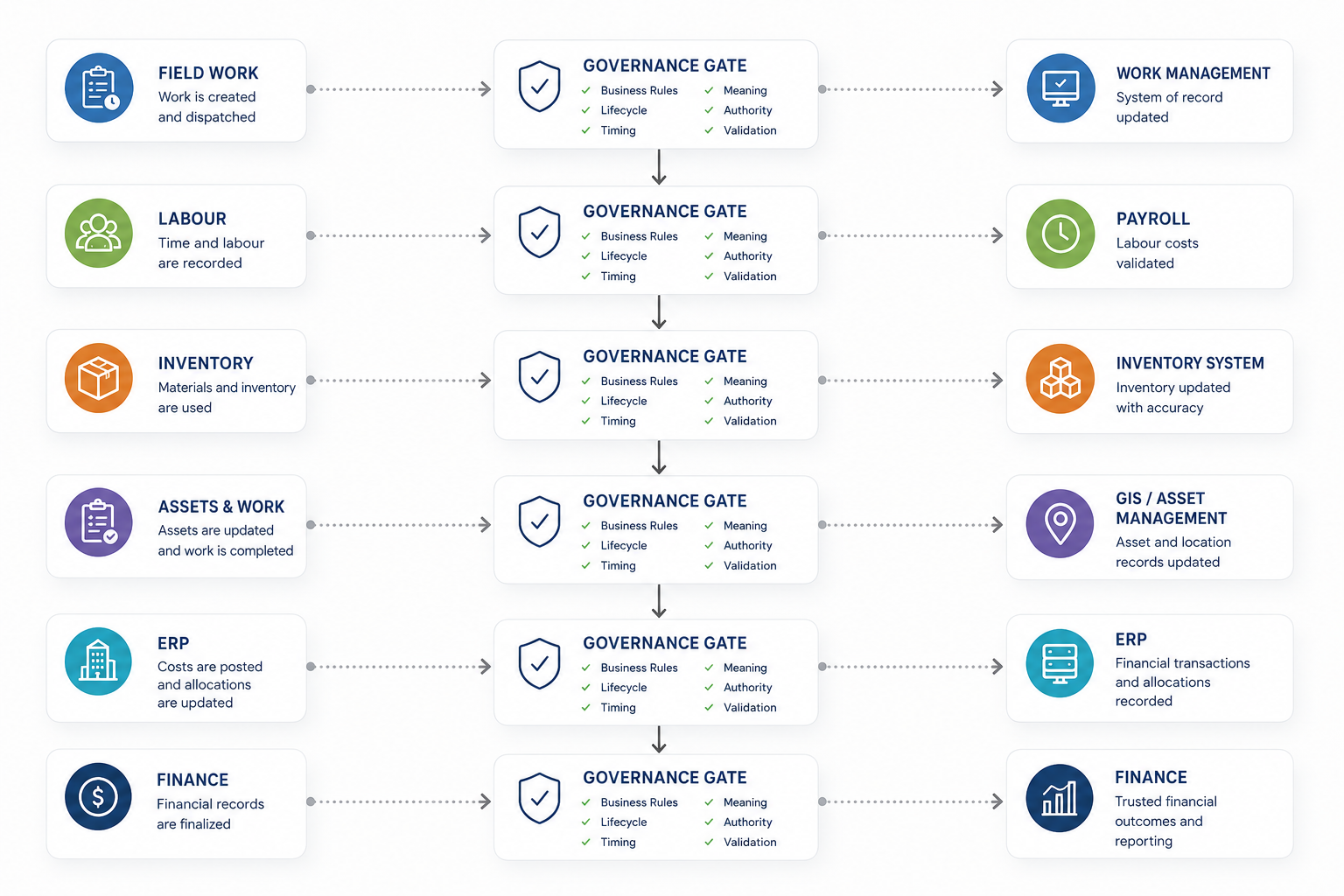
Field operations drive financial outcomes, but moving work into finance requires more than moving data. Spatial DNA governs every operational handoff, keeping labour, materials, assets, approvals, and financial systems aligned. The result is trusted financial outcomes without manual reconciliation.
"Every work order tells a story. The problem is that every system tells a different version of it."
Todd Lewis, CEO

Typical Field to Finance Workflow
Every organization follows a different operational process, but the outcome should always be the same: one trusted financial record.
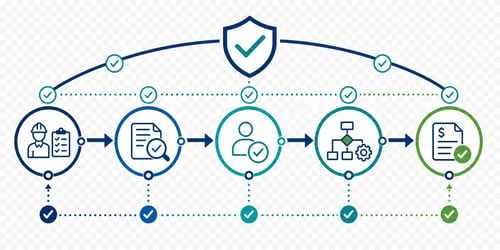
Plan & Schedule → Execute Work → Capture Labour & Materials → Validate & Approve → Allocate Costs → Update Assets → Synchronize ERP & Finance → Complete with Full Audit History
Your systems do their jobs well, but the work between them is where trust breaks down.
Most local governments, municipalities and utilities have already invested in leading enterprise applications. Their work management, ERP, payroll, GIS, finance, and customer systems perform exactly as intended. The challenge begins when work moves between them. Different business rules, approval processes, and timing create inconsistencies that require manual intervention before anyone can trust the final result.


Operational Decisions Depend on Trusted Information.
A delayed labour approval, an unreconciled inventory transaction, or a work order that closes before costs are complete may appear to be isolated issues. Together, they create reporting discrepancies, budget uncertainty, delayed month-end close, and reduced confidence in operational data. Teams spend valuable time validating information instead of acting on it.
Integration Moves Data. Governance Creates Trust.
Traditional integrations answer a technical question: Can information move between systems? Field to Finance answers a business question: Can every department trust the outcome once it arrives?
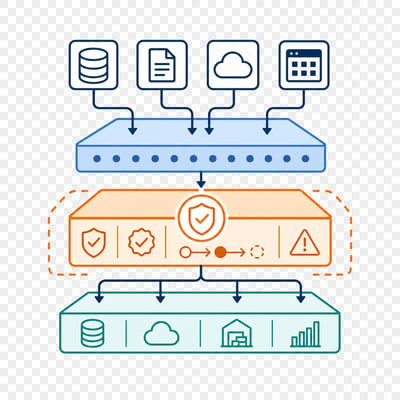
Spatial DNA governs business rules, approval authority, lifecycle states, timing, validation, and exception handling before information reaches downstream systems. The result is controlled workflow execution instead of disconnected automation.


The Transformation
From Completed Work to Operational Truth
Every completed work order should produce one consistent version of the truth. Labour is verified, inventory is reconciled, approvals occur in the correct sequence, assets are updated, and financial costs are allocated with complete traceability. Instead of relying on manual reconciliation, your organization gains a governed operational process that delivers accurate financial outcomes, faster decision-making, and greater confidence across every department.
How It Works
Govern the Journey, Not Just the Data
Field to Finance governs every operational transition from the moment work begins until financial outcomes are complete. Instead of relying on disconnected integrations, Spatial DNA applies consistent business rules, validation, approvals, and workflow controls across every participating system. Each operational event is verified before it progresses, ensuring information remains accurate, traceable, and aligned throughout the entire process.


Built Around Your Existing Systems
Keep the Technology You Trust
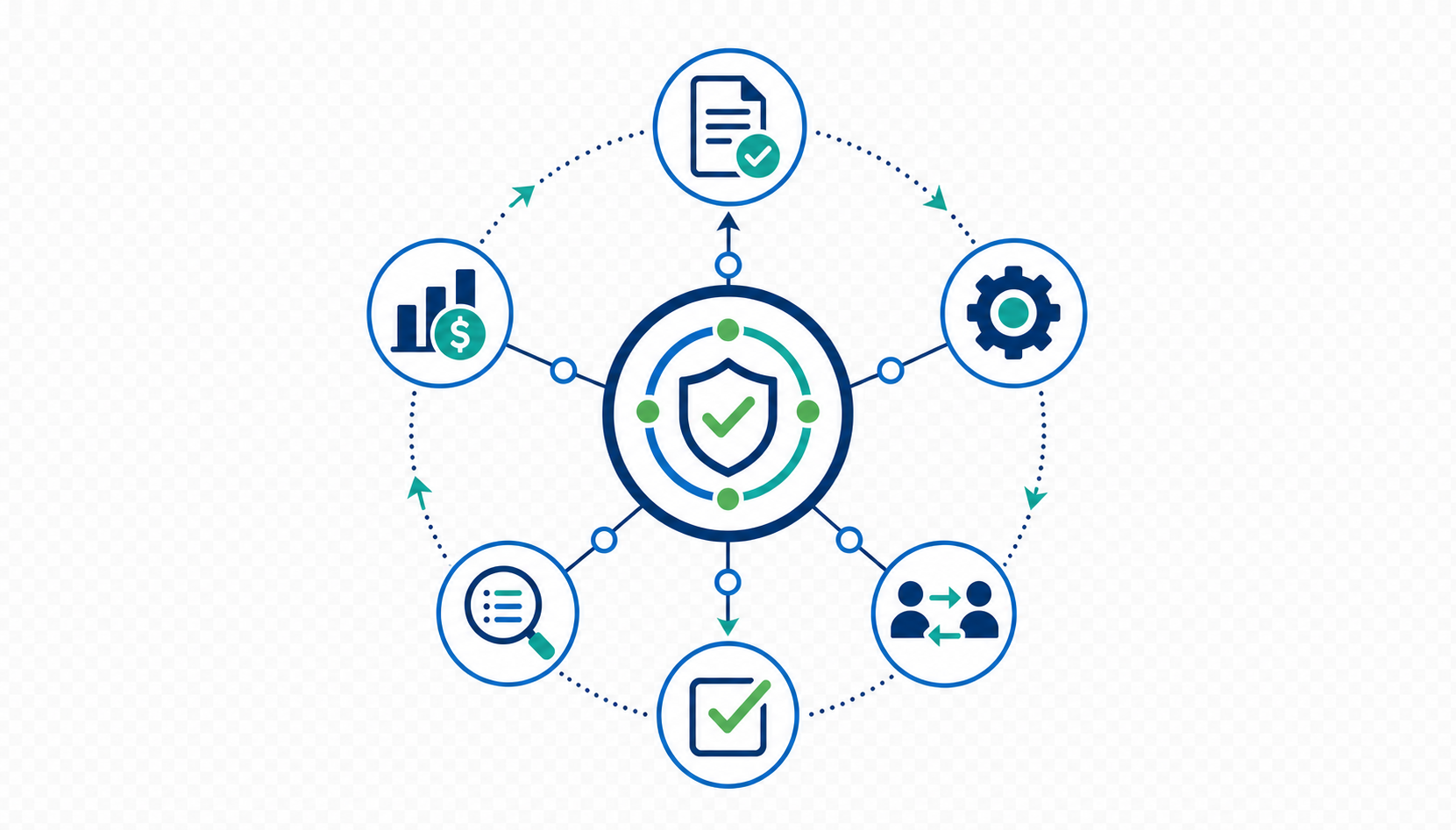
Replacing enterprise systems is expensive, disruptive, and rarely necessary. Field to Finance is designed to work with the investments you have already made, connecting work management, ERP, GIS, payroll, finance, inventory, customer systems, and other operational applications through a governed execution model. Your teams continue using familiar software while Spatial DNA ensures those systems operate as one coordinated workflow.
Business Outcomes
Better Operational Decisions Begin with Better Operational Control
Organizations implementing Field to Finance achieve measurable improvements across operations and finance because information is validated before it reaches downstream systems.
Improve financial confidence by reducing manual reconciliation and reporting discrepancies.
Accelerate operational workflows by automating approvals, validations, and handoffs between departments.
Strengthen governance with complete traceability across every workflow decision.
Increase organizational trust by ensuring every system reflects the same operational outcome.

Governed Workflow
Spatial DNA governs workflow transitions between field operations and financial systems, ensuring every decision follows defined business rules consistently.
Business Rules
Configurable business logic validates data, enforces approvals, and applies organizational policies throughout every workflow without modifying existing systems.
Lifecycle Control
Track work orders from planning to financial close with complete visibility into status, approvals, exceptions, and audit compliance.
Financial Alignment
Field activities automatically generate accurate financial records, connecting labour, inventory, and asset costs directly to ERP reporting.