Governed workflow automation for cities and utilities.
One platform for the work between your systems.
Spatial DNA connects GIS, ERP, finance, work management, asset, field, customer, and reporting systems. It gives operational data shared meaning and controls how work, cost, status, and decisions move between them.
Keep your systems. Control the handoffs. Trust the outcome.
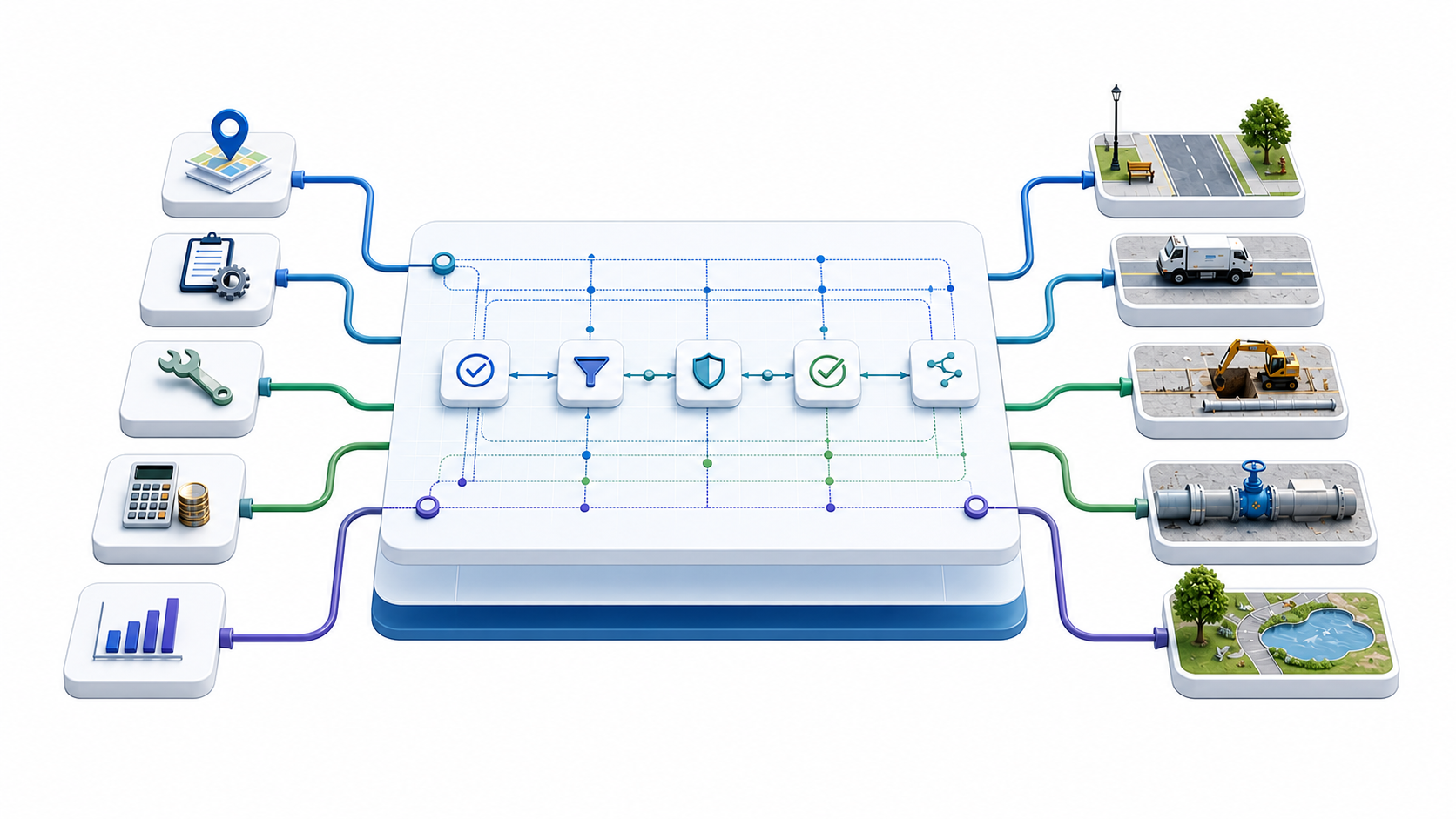
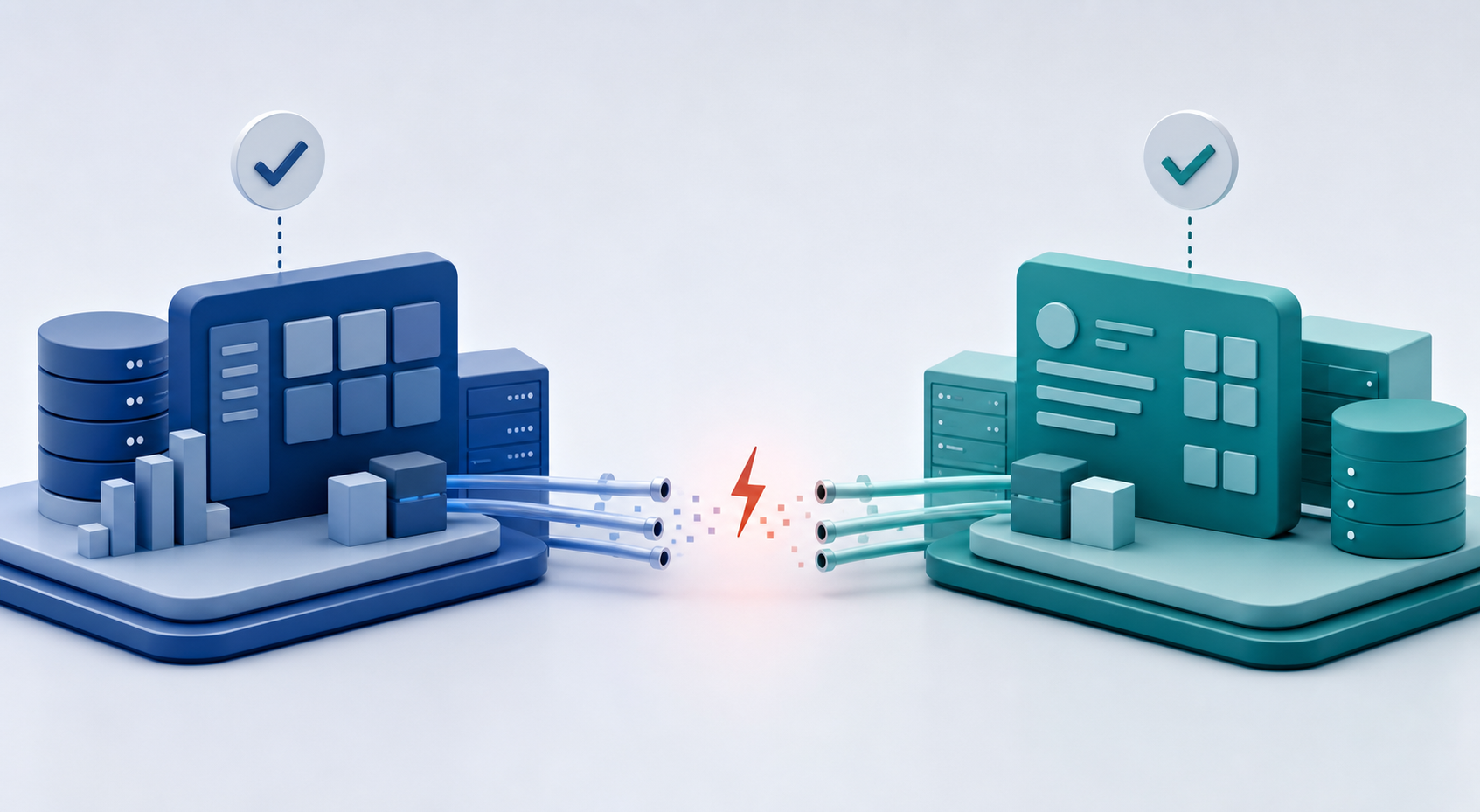
Connected systems do not always create a controlled workflow.
Cities and utilities already rely on GIS, ERP, finance, work management, asset, customer, and reporting systems. The problem is not the systems themselves. It is what happens when work, cost, status, and decisions move between them without shared rules, clear ownership, or a reliable record of what happened.
Integration moves data, and Spatial DNA governs what happens next.
Your existing systems stay in place. Spatial DNA controls handoffs, manages exceptions, and records each action throughout the workflow.
Five layers. One controlled workflow.
Each layer performs a distinct role in turning disconnected system activity into governed operational execution.
Connectors and Data Mappers
Connect with the systems you already use.
Connectors move information between infrastructure systems. Data mappers translate different formats and structures into a consistent foundation for execution.
Execution Control Layer
Control what happens between systems.
The Execution Control Layer validates, enriches, compares, routes, retries and records each operation according to defined workflow rules.
Unified Model
Give operational data shared meaning.
The Unified Model aligns how systems describe work, assets, locations, costs, customers, events, and status.
Specifications and Extension Model
Define the rules before automation runs.
Versioned specifications define data flows, mappings, validation, authority, timing, exceptions, and connector behavior. Extensions accommodate local requirements without breaking the reusable core.
AI and APIs
Extend automation without surrendering control.
Governed APIs to connect new systems and services. AI can interpret, summarize, or recommend within workflows where data quality, authority and human accountability remain explicit.
How the layers work together
Five layers. One controlled workflow.
Each layer has a distinct job: connect, control, align, define and extend. Together, they turn disconnected system activity into governed operational execution.
From system activity to trusted execution.
A controlled workflow follows a clear path:
- Connect systems and source records.
- Translate information into shared operational meaning.
- Validate data and apply decision rules.
- Execute the correct action or route the exception.
- Record what happened for monitoring, audit and improvement.
Reusable where possible. Extensible where necessary.
The Spatial DNA Platform helps infrastructure teams:
- Connect existing operational systems.
- Standardized data across workflows.
- Validate records before downstream action.
- Control system and team handoffs.
- Manage failures and exceptions.
- Maintain an auditable execution record.
- Extend workflows without rebuilding the core.
One platform foundation. Multiple operational outcomes.
The same governed platform supports:
- Field to Finance: Field activity becomes complete, defensible financial records.
- Service to Work: Customer requests become correctly governed work.
- Plan to Work: Approved plans remain connected to execution and cost.
Start with one workflow.
Bring us a workflow where systems, data or teams no longer agree. We will help you identify the breakpoint and determine how the Spatial DNA Platform can bring it under control.
One workflow. Five governed layers. A trusted operational outcome.
What is the Spatial DNA platform?
The Spatial DNA platform helps infrastructure organizations govern the handoffs between systems, workflows, data, APIs, AI, teams, and decisions so work can move from disconnected processes to trusted execution.
Who is the Spatial DNA platform for?
The platform is for cities, towns, utilities, public works teams, GIS teams, finance teams, IT teams, planning teams, operations leaders, and infrastructure organizations that need systems and data to align.
Does Spatial DNA replace ERP, GIS, CMMS, or asset management software?
No. Spatial DNA should be positioned as an execution control layer that connects, governs, validates, and controls the handoffs between existing systems such as ERP, GIS, CMMS, finance, asset management, planning, reporting, and work order management tools.
What is an execution control layer?
An execution control layer is the operational layer between systems that helps define workflow rules, validate data, manage handoffs, track exceptions, and keep work aligned to outcomes.
What is data governance for infrastructure operations?
Data governance for infrastructure operations means defining the rules, ownership, validation, system authority, and workflow logic that help infrastructure teams trust the data used for work, cost, assets, reporting, planning, and decisions.
How does the platform support workflow automation?
The platform supports workflow automation by helping teams map handoffs, define rules, validate required data, connect systems, monitor exceptions, and control how work moves across departments and systems.
How does Spatial DNA support AI and APIs?
Spatial DNA supports AI and APIs by positioning them inside a governed operating model. APIs can move data between systems, while AI-assisted use cases should depend on validated data, clear ownership, and controlled workflows.
What is the first step?
The first step is to map one workflow where systems, data, and teams do not agree. From there, teams can define the rules, identify handoff failures, and create a practical path to control.