Where Infrastructure Workflows Stay Under Control

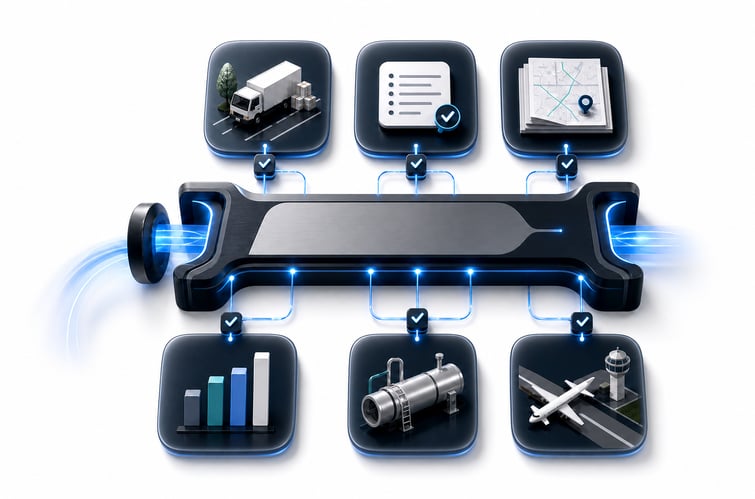
Integration moves data. Spatial DNA controls what happens in between.

When work moves between GIS, work management, ERP, finance, payroll, and customer systems, the challenge is keeping meaning, ownership, timing, and decisions aligned.

Bleeding Edges Spatial Color Composition-2
SelfContained Systems in Digital Space

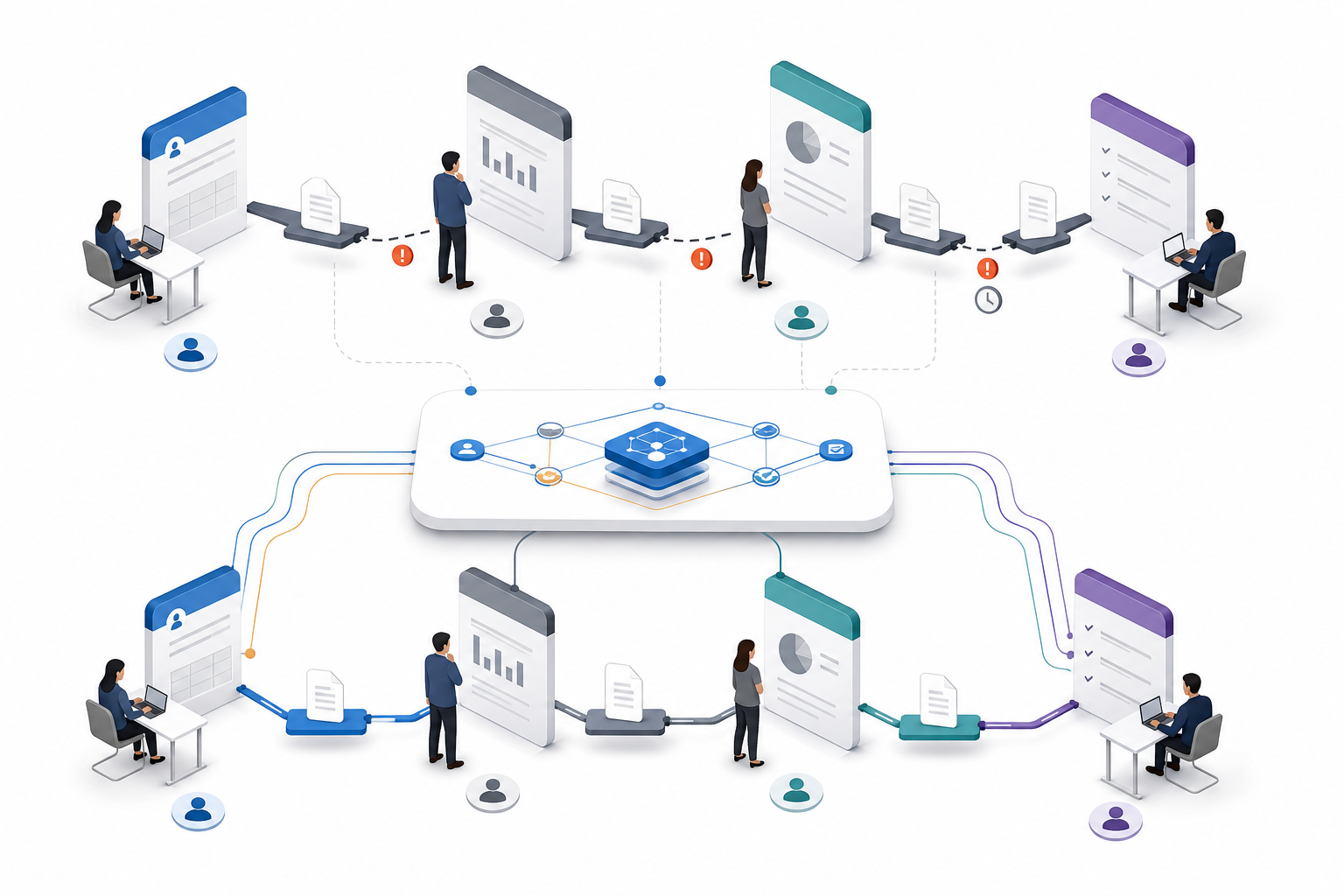
The problem: Your systems work. The workflow between them does not.

Each system may be doing exactly what it was designed to do. The problem begins in the handoffs, where ownership, timing, and rules become less clear.

A work order closes before all costs arrive. A status means one thing in the field and another in Finance. A customer request creates work, but no one is sure which system owns the next decision.

Teams compensate with spreadsheets, manual checks, workarounds, and people who simply know how everything is supposed to fit together.

When those handoffs are not controlled, every system can be right while the workflow is wrong.

Meet Marge. She is Not Supposed to Be Your Integration Layer.

Every organization has a Marge.

She knows which status really means complete, which workaround everyone relies on, and what to do when two systems disagree.

She is experienced. Indispensable. And a terrible integration strategy.

If one person knows how everything truly fits together, the process has not been automated. It has been concealed.

Spatial DNA turns that hidden knowledge into a controlled workflow everyone can trust.

So Marge can finally take a vacation.

ChatGPT Image Jul 15, 2026, 08_04_09 AM

Three workflows. One problem.

The symptoms change. The problem does not. Work gets done in the field, but Finance sees a different story.

A customer asks for something, but the request gets lost somewhere between “received” and “someone should probably deal with this.”

A capital plan gets approved, but turning that plan into actual work requires a small army of spreadsheets, emails, and institutional memory.

Different teams. Different systems. Same troublesome space in between.

That is where Spatial DNA works.

Field to Finance Workflow Misalignment and Integration Challenges

ChatGPT Image Jul 15, 2026, 01_21_10 PM

The Automation Breakpoint Model identifies five conditions that determine whether a cross-system workflow remains trustworthy.


Aviation Data Operations

Govern mission-critical aviation data.
Control aviation data as it moves across standards, systems, teams, and operational processes.

For Local Governments, Public Works and Utilities

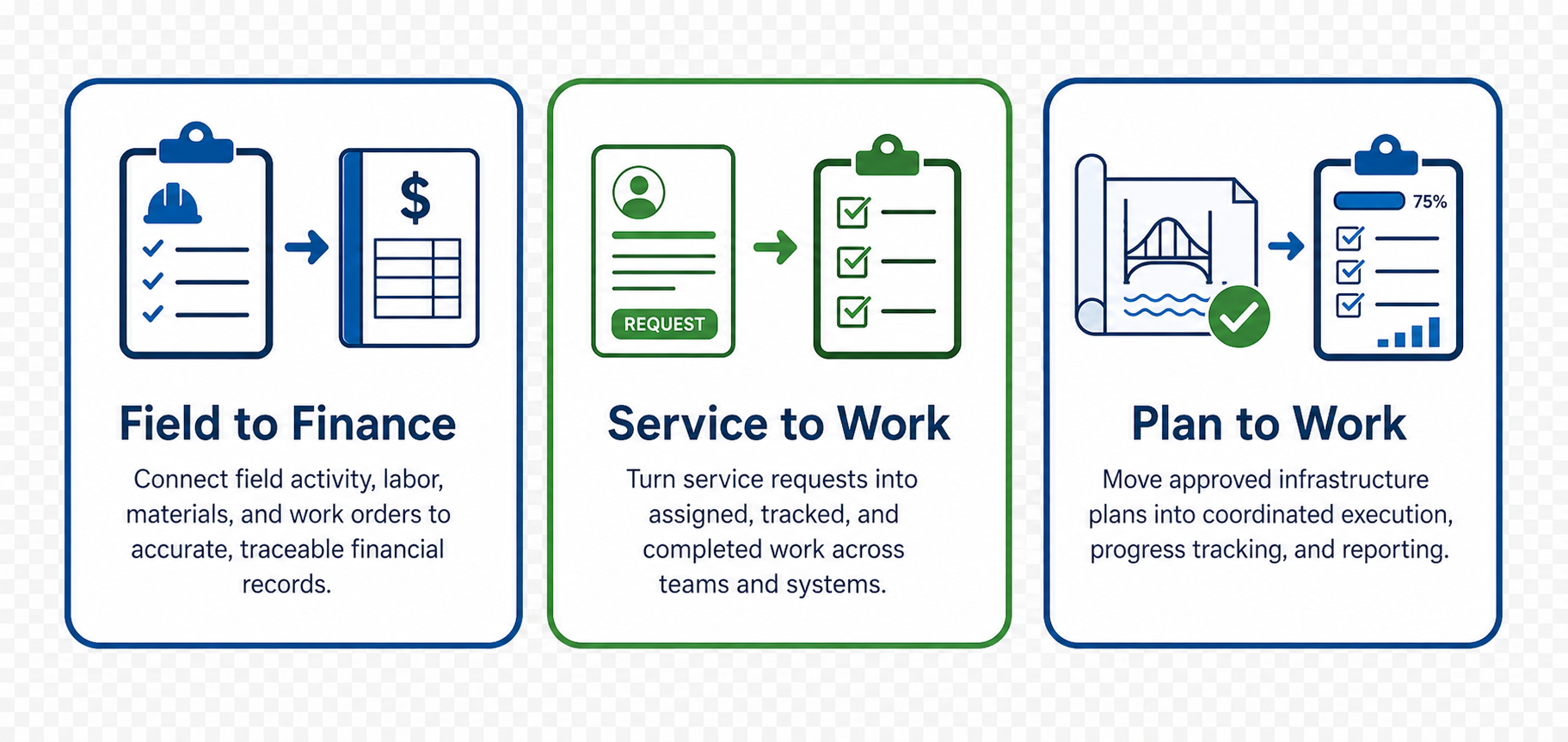
FIELD TO FINANCE

Connect work performed in the field with financial outcomes by turning operational activity, labor, materials, and assets into accurate costs, invoices, and financial insight.

LEARN MORE
SERVICE TO WORK

Turn every valid request into controlled action by connecting service requests, permits, inspections, and customer information to assignments, updates, and completed outcomes.

LEARN MORE
PLAN TO WORK

Keep approved priorities connected to execution by linking capital plans, asset priorities, budgets, projects, work orders, costs, progress, and completed outcomes from planning through completion.

LEARN MORE

Specifications

Define operational meaning, authority, workflow states, timing, validation, and exceptions.

Unified Models

Translate system-specific records into consistent definitions for work, assets, locations, costs, parties, and status.

Connectors & Data Mappers

Connect systems and translate their information into a governed operating model.

Controlled Data Flows

Stop invalid information, retry recoverable failures, and route exceptions to the right owner.

Audit and Observability

Record what happened, when it happened, which rule was applied, and where intervention is required.


Find where automation, workflows, and data lose trust.

A Spatial DNA diagnostic helps your team uncover the handoffs that create delays, reconciliation, mistrust, and wasted effort. Bring one messy workflow. We will help you map the break, define the gap, and identify the path to control.

Controlled workflows produce outcomes people can trust.

When the In-Between is controlled:

  • Work, time, cost, and status remain aligned.
  • Problems are caught before they move downstream.
  • Decisions have clear authority.
  • Exceptions follow a defined path.
  • Operational and financial records are easier to defend.
Start with an Automation Diagnostic.

Spatial DNA will help you identify the breakpoint, define the missing controls, and determine the practical path forward.

CEOs, COOs, CTOs

Align decisions across systems with consistent workflows that ensure operations, financials, and outcomes stay reliable.

Asset Managers

Prioritize assets with aligned data and workflows that ensure decisions are consistent, defensible, and repeatable.

City Engineers

Keep projects moving across systems with coordinated workflows that ensure every step progresses correctly.

IT and Finance Leaders

Maintain system integrity with controlled workflows that ensure data, decisions, and outcomes stay consistent.

Plugged In: The Smart Workflow Series

Learn how connected workflows help cities reduce data silos, improve decision making, and prepare for predictive operations.

Solutions built for how work actually moves

Work does not stay in one system. It moves across many. Each step introduces risk, inconsistency, and manual effort. Our solutions ensure workflows progress correctly, systems stay aligned, and outcomes remain consistent from start to finish.