Infrastructure Workflow Automation for Cities and Utilities
Connect GIS, asset management, ERP, CRM, and field systems to automate how work moves across departments.
Spatial DNA helps cities and utilities eliminate manual handoffs, reduce data re-entry, and keep workflows aligned from request to completion — without replacing existing systems.
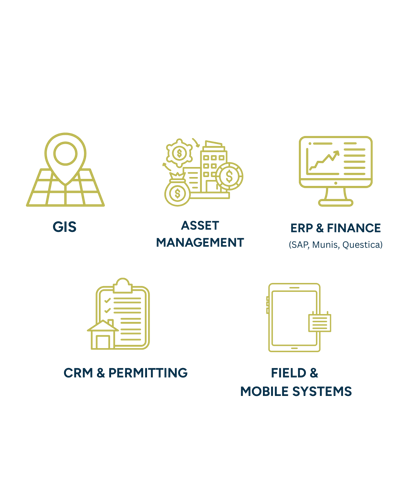
Most cities and utilities already run powerful systems - GIS, asset management, ERP, CRM, and field platforms.
The challenge isn’t the systems themselves. It’s that they don’t work together in day-to-day operations.
As a result:
Staff manually re-enter data
Spreadsheets fill the gaps
Status updates lag reality
Approvals get stuck in email threads
Decisions are made without full context
This creates delays, risk, and frustration across departments.
THE SPATIAL DNA APPROACH
Built for How Cities and Utilities Actually Work
Spatial DNA does not replace your systems. It connects and automates workflows between them.
The SDNA Platform acts as an integration and automation layer, enabling systems like Esri, Trimble, Cityworks, and ERP platforms to work together in real time.
This allows cities and utilities to:
Automate repeatable workflows
Maintain data integrity across systems
Reduce manual effort and IT burden
Gain shared visibility across departments
HOW IT WORKS
Connect → Automate → Align → Decide
Connect Existing Systems Securely integrate GIS, asset management, ERP, CRM, permitting, and field platforms using pre-built connectors and common domain models.
Automate Operational Workflows Apply reusable automation logic to real processes - not abstract data syncs.
Align Teams and Data Ensure updates flow bi-directionally so everyone sees the same information at the same time.
Work orders automatically created in asset systems
Status updates synchronized in near real time
Asset & Financial Synchronization
Work order updates reflected in ERP
Inventory, labor, and cost data aligned
Clean audit trails without reconciliation
Capital Project Coordination
Project data synced across engineering, finance, and permitting
Approvals routed digitally
Leadership gains real-time visibility
Field → Billing Automation (Utilities)
Field updates captured on mobile
Billing and inventory updated automatically
Faster service closure and fewer errors
REAL-WORLD RESULTS
Used in Live Municipal and Utility Environments
Cities and utilities use Spatial DNA to eliminate spreadsheets, reduce manual data entry, and automate infrastructure workflows without costly system overhauls.
Organizations typically see:
60 - 80% reduction in manual data handling
Faster approvals and service resolution
Improved cross-department coordination
Lower integration risk for IT teams
HOW THIS COMPLEMENTS YOUR EXISTING SYSTEMS
Works With Your Technology Stack - Not Against It
Spatial DNA extends the value of the systems you already use, including GIS, asset management, ERP, CRM, and permitting platforms.
It focuses on workflow orchestration and automation - not replacing or owning your underlying systems.
Bring Your Infrastructure Workflows Together
Connect your systems, automate workflows, and make faster, more defensible infrastructure decisions.