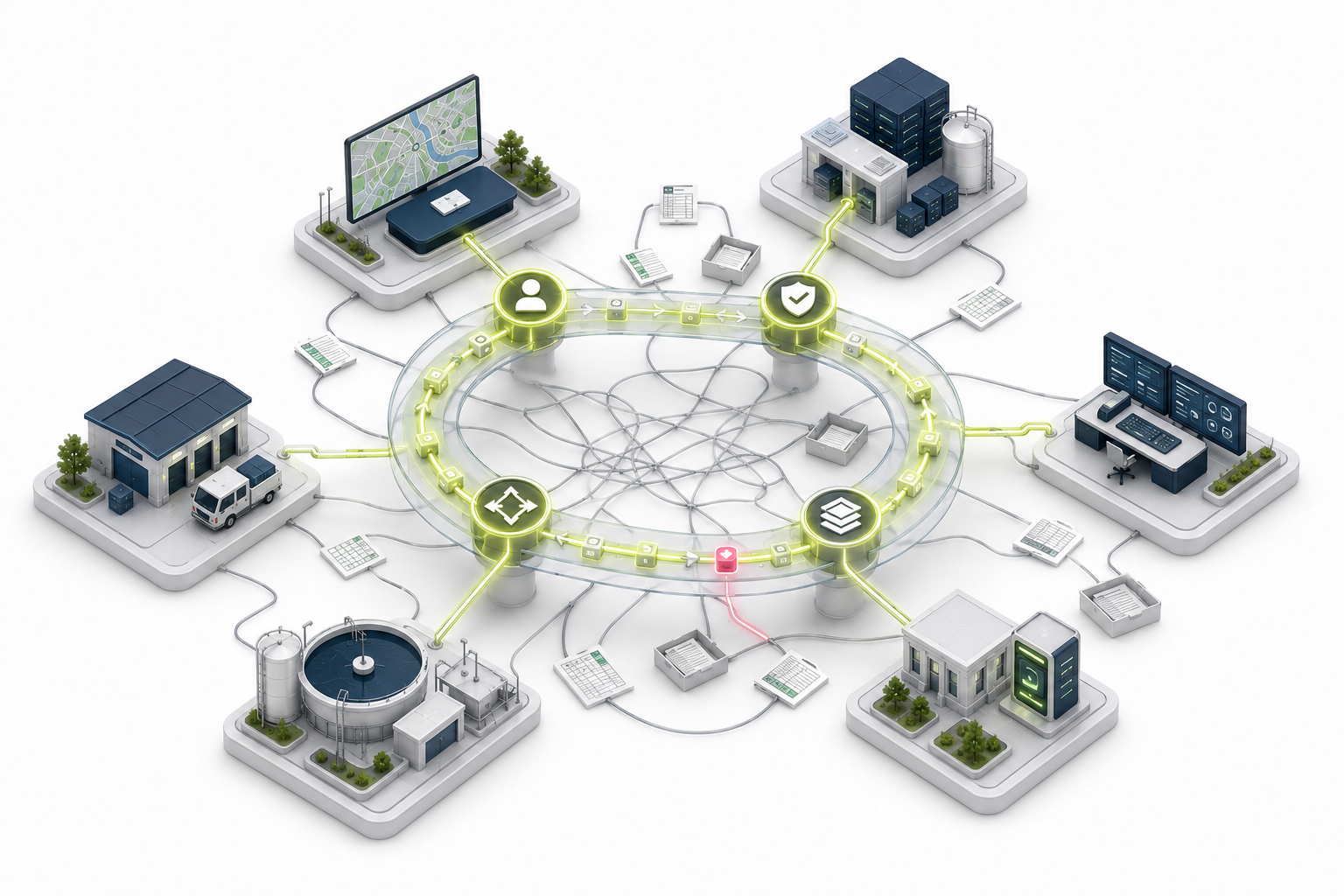

Your systems can be connected and still disagree about what should happen next.

Spatial DNA controls the rules between them: what a record means, which system has authority, when work can move forward, what must be validated, and what happens when something goes wrong.

Connected is not the same as controlled.

An integration can successfully move a record while the workflow still makes the wrong decision

dc40b377-dcdb-4adb-8675-ff1d880133d1

What the Platform controls

Spatial DNA Custom Icon

Meaning

Keep every system working from the same definition of work.

Spatial DNA Icon

Authority

Make clear which system owns each decision across the workflow.

Spatial DNA Icon

Lifecycle

Keep statuses aligned as work moves from start to finish.

Spatial DNA Icon

Time

Control when work moves, waits, retries, or requires human intervention.

Spatial DNA Icon

Exceptions

Handle failures consistently, with clear rules, ownership, and next steps.
7dd8b01d-ff26-4ea4-9f7e-828df0740372

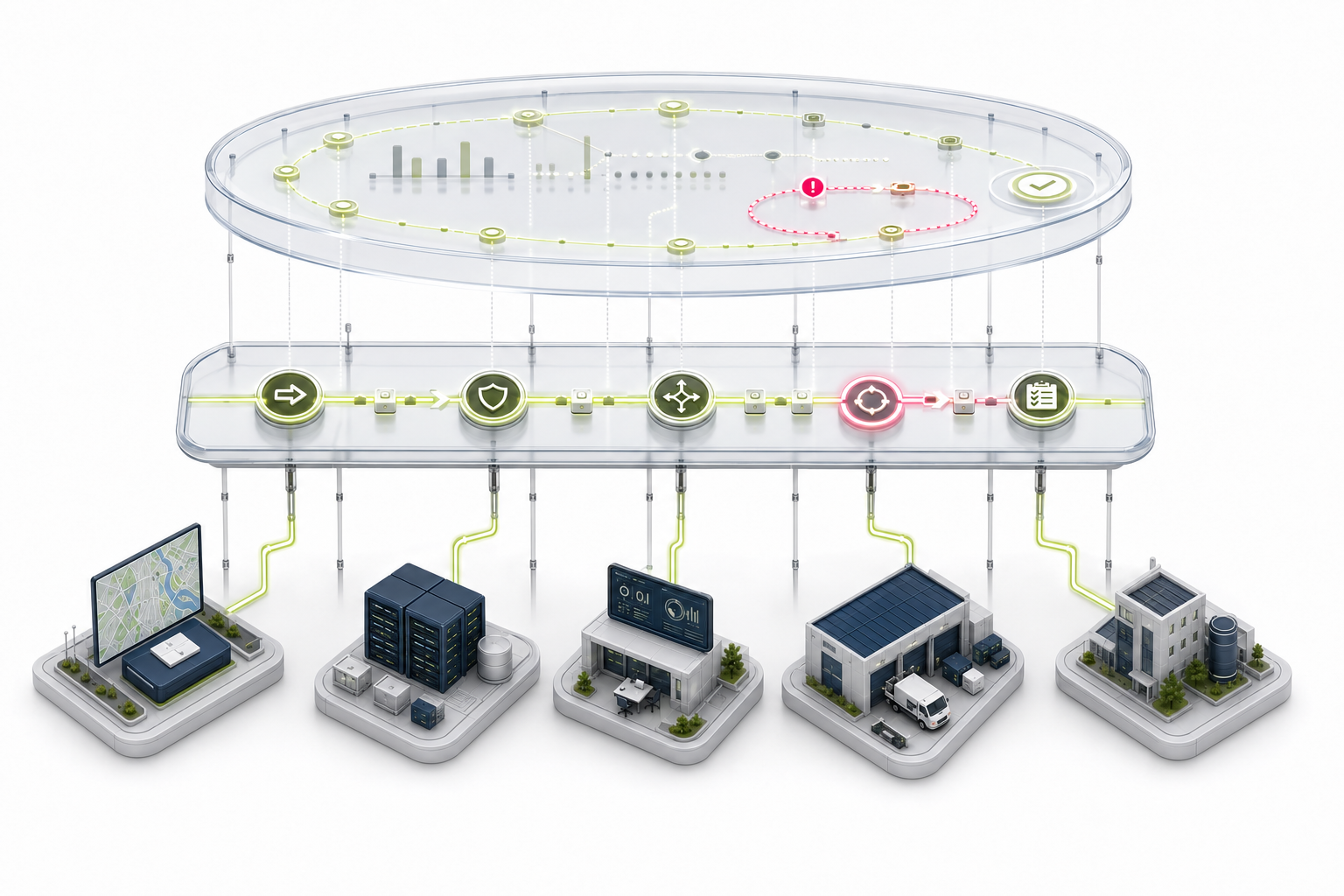
Execution Control Layer

Controls workflow movement, validation, retries, exceptions, and execution records across systems.

Specifications

Define operational meaning, authority, workflow states, timing, validation rules, and exception paths.

AI + APIs

Support governed automation, system integration, workflow intelligence, and AI-ready operational data.

Partner Delivery

Enable repeatable, governed implementation patterns that can scale through delivery partners over time.

Governed execution with complete operational visibility.

The Spatial DNA Platform controls the operational decisions that happen between systems. It validates records, applies workflow rules, manages exceptions, routes issues to the right owner, and records what happened.

This creates a consistent execution layer for infrastructure workflows that need to stay aligned across operations, finance, GIS, IT, planning, and leadership.


System connectivity

Connect GIS, ERP, finance, work management, asset, customer, and reporting systems into one operational foundation.

Policy based execution

Validate, enrich, route, retry, and record workflows using business rules, ownership, timing, and operational policies.

Unified operational model

Align work, assets, locations, customers, costs, events, and status into one consistent cross-system model.

Adaptable specifications

Define mappings, validation rules, workflow behavior, authority, timing, and exceptions without changing the reusable core.

APPLIED TO INFRASTRUCTURE WORKFLOWS

One platform foundation. Multiple operational outcomes.

Field to Finance: Field activity becomes complete, defensible financial records.

Service to Work: Customer requests become correctly governed work.

Plan to Work: Approved plans remain connected to execution and cost.

AUTHORITY

Built for complex infrastructure environments.

Spatial DNA brings infrastructure workflows, geospatial data, enterprise systems, and operational governance into one execution model.

The platform is designed for cross-system work that must remain reliable across public works, finance, GIS, IT, planning, and operations.

Start with the workflow that needs control.

Spatial DNA can help your team identify where connected systems are losing trust and determine how the platform can bring the workflow under control.